Power, heat, and related inconveniences
Extracts from the notebooks of Ponder Stibbons, Lecturer in Applied Inconveniences
Unseen University Power & Light Co. (UU P&L) is Ankh-Morpork’s quietly indispensable utility and loudly inexplicable liability. It exists to provide electricity, heat, steam, chilled water, and other strictly necessary phenomena to a city that has learned, through experience, that darkness and cold tend to encourage the wrong sort of civic participation.
From a distance, UU P&L appears to be a company. Up close, it is more accurately described as an agreement between physics, bureaucracy, and several things that ought not to be awake at the same time.
The company operates out of a series of repurposed basements, annexes, and one structure that insists, at length and with diagrams, that it was never meant to be a building at all. These spaces were acquired piecemeal over decades, usually after someone noticed that something important was already happening there.
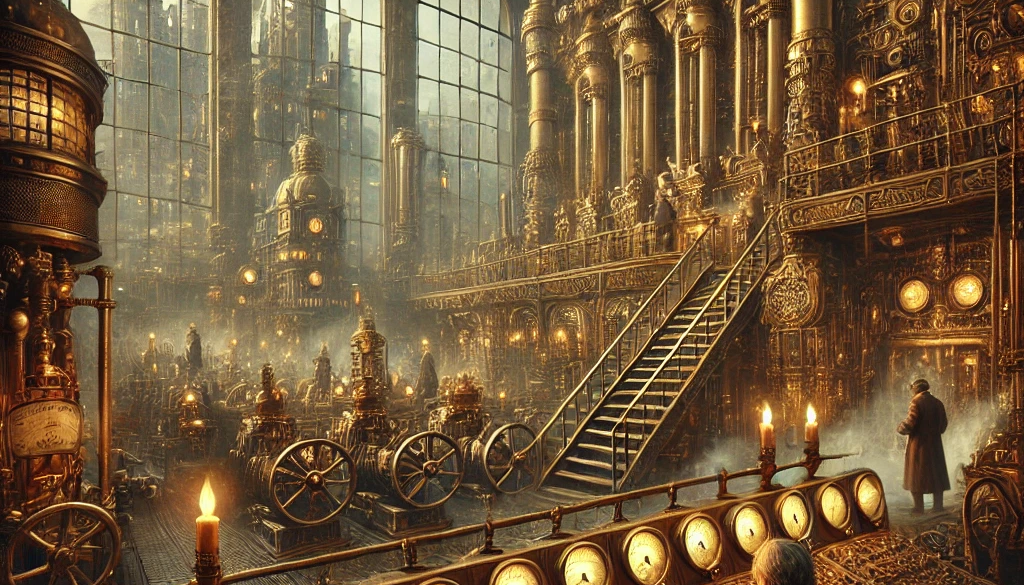
Power generation began conventionally enough: turbines, boilers, switchgear. Unfortunately, “conventionally” at Unseen University merely means “before anyone added cleverness”.
Over time, incremental upgrades were applied:
control systems installed to improve reliability
monitoring systems installed to understand why reliability had not improved
safety systems installed to prevent the monitoring systems from becoming involved
Each layer was added with grant-funded optimism and the budgetary discipline of a wizard who has discovered procurement. Nothing was ever removed. Instead, new systems were encouraged to coexist politely with the old ones, a policy that has worked surprisingly well provided one does not ask why.
UU P&L’s Hex Steam Turbine Control System forms the mechanical heart of the operation. Designed in an era when PLCs were expected to outlive their designers, it still governs massive steam turbines through hardwired logic and polling loops that have never heard of cybersecurity and are deeply suspicious of it. These systems are stable, predictable, and utterly unforgiving of comfortable assumptions.
Around the turbine sits the apparatus that decides whether the turbine is allowed to keep turning. Protective relays watch the Dolly Sisters and Nap Hill feeders for undervoltage, overcurrent, and overspeed, and trip their breakers when a threshold is crossed. A revenue meter counts what leaves. None of it asks for a password, on the reasonable historical assumption that anyone close enough to send a command was already trusted. That assumption has not aged well.
Out at the edge sits the Guild Quarter, the boundary where University infrastructure meets Ankh-Morpork proper and nobody checks credentials too carefully. Gateways translate between protocols, a clacks relay shuttles telemetry, a clock hands out the time everything else trusts, and a directory answers questions about who lives where. It is, in the official diagrams, a demilitarised zone. In practice it is an attack surface with good manners.
Finally, the City-Wide Distribution SCADA ties everything together, managing power and heat delivery across Ankh-Morpork. It interfaces with substations, pumping stations, and civic infrastructure that predate the concept of “the grid” but have been grandfathered into it anyway. The SCADA system is continuously monitored, occasionally understood, and absolutely not to be rebooted during business hours.
From a testing perspective, UU P&L represents a perfect storm of legacy technology, operational fragility, undocumented behaviour, and city-level consequences. Every probe must be deliberate, every assumption questioned, and every “small test” treated as if it might cause a blackout, a flood, or a minor magical anomaly. Sometimes all three.
I became involved when the lights in the High Energy Magic Building began flickering in a pattern that, when charted, spelled out the word NO in High Aetheric. This was initially dismissed as coincidence until the kettle in the Senior Common Room began screaming.
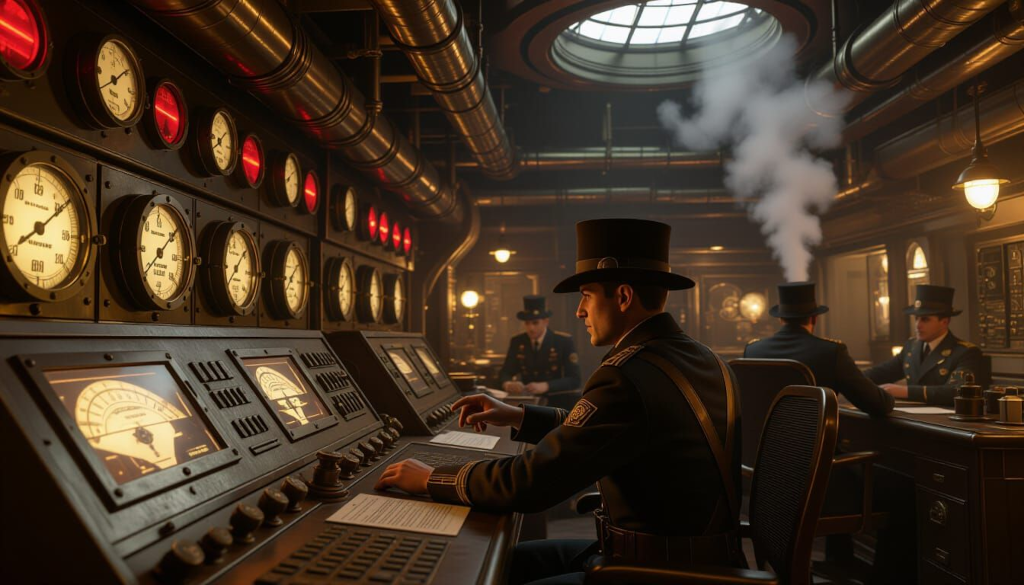
UU P&L technically has a control room. In practice, it has several areas where people stand while staring at numbers and making meaningful noises. The main operations console is operated by staff who understand three things extremely well:
Which alarms can be ignored
Which alarms must never be ignored
Which alarms indicate that something has developed opinions
Control engineers visit infrequently but intensely. They arrive with laptops, diagrams, and expressions of restrained despair, adjust a few parameters, and leave behind handwritten notes reading “DO NOT TOUCH THIS AGAIN” in at least three handwriting styles.
In short, UU P&L keeps Ankh-Morpork running. Most days.